
Law refers to a system of behavioral norms formulated or recognized by the state and enforced through state power. It reflects the will of the ruling class determined by specific socio-economic conditions, defines rights and obligations, and aims to establish, protect, and develop social relations and order favorable to the ruling class. The term "law" can be understood broadly or narrowly. Broadly, it encompasses all normative documents; narrowly, it refers specifically to normative documents enacted by the National People's Congress (NPC) and its Standing Committee. Regulations denote normative documents issued by state organs, such as administrative regulations promulgated by China's State Council and local regulations enacted by provincial-level people's congresses and their standing committees.
As an essential component of the legal system, local regulations fundamentally differ from local government rules:
- Firstly, their promulgating authorities differ;
- Secondly, their authority and social effects differ. Local government rules are subordinate to local regulations, which are effective within their respective provinces (municipalities) and rank below the Constitution, national laws, administrative regulations, and provincial-level local regulations.
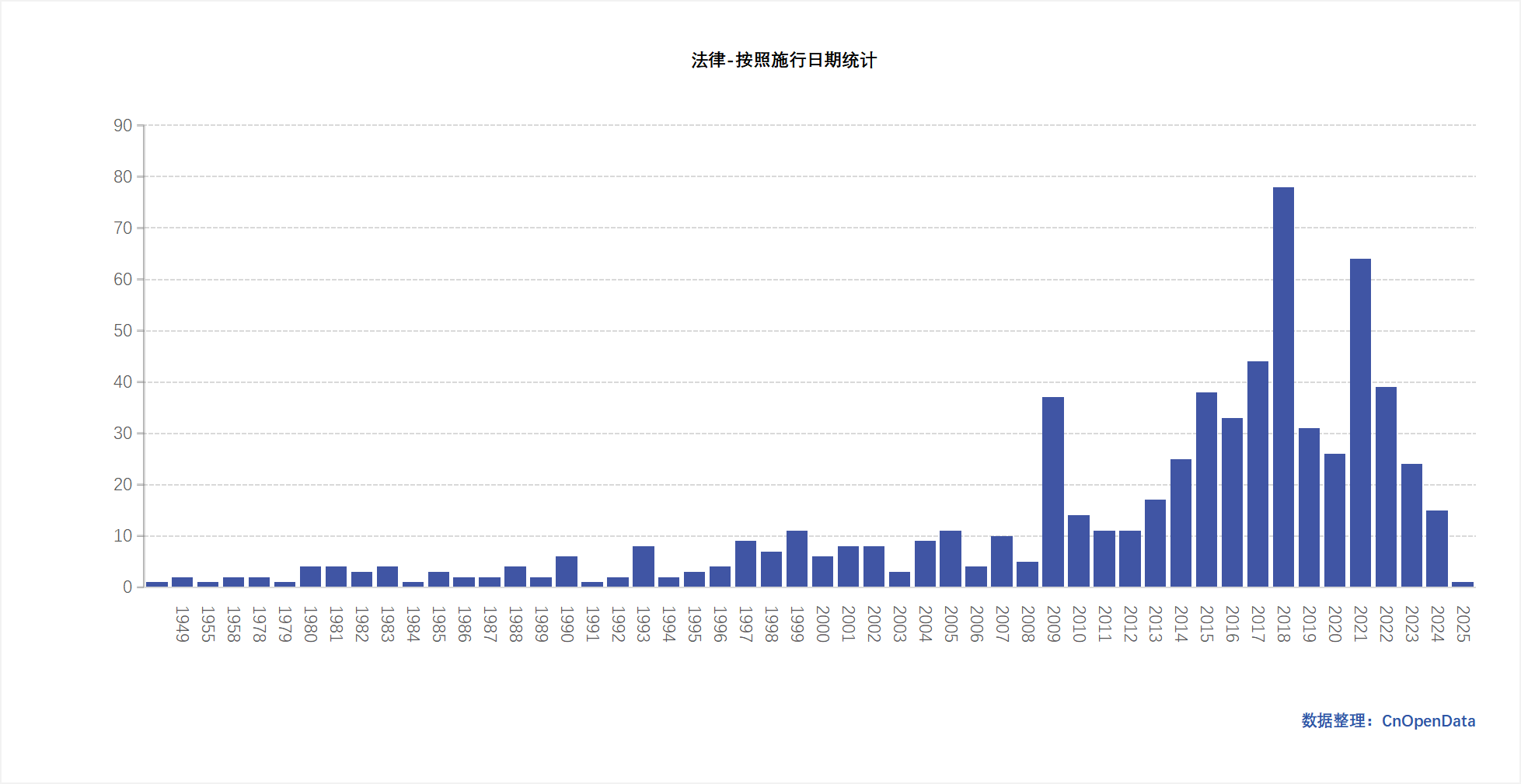
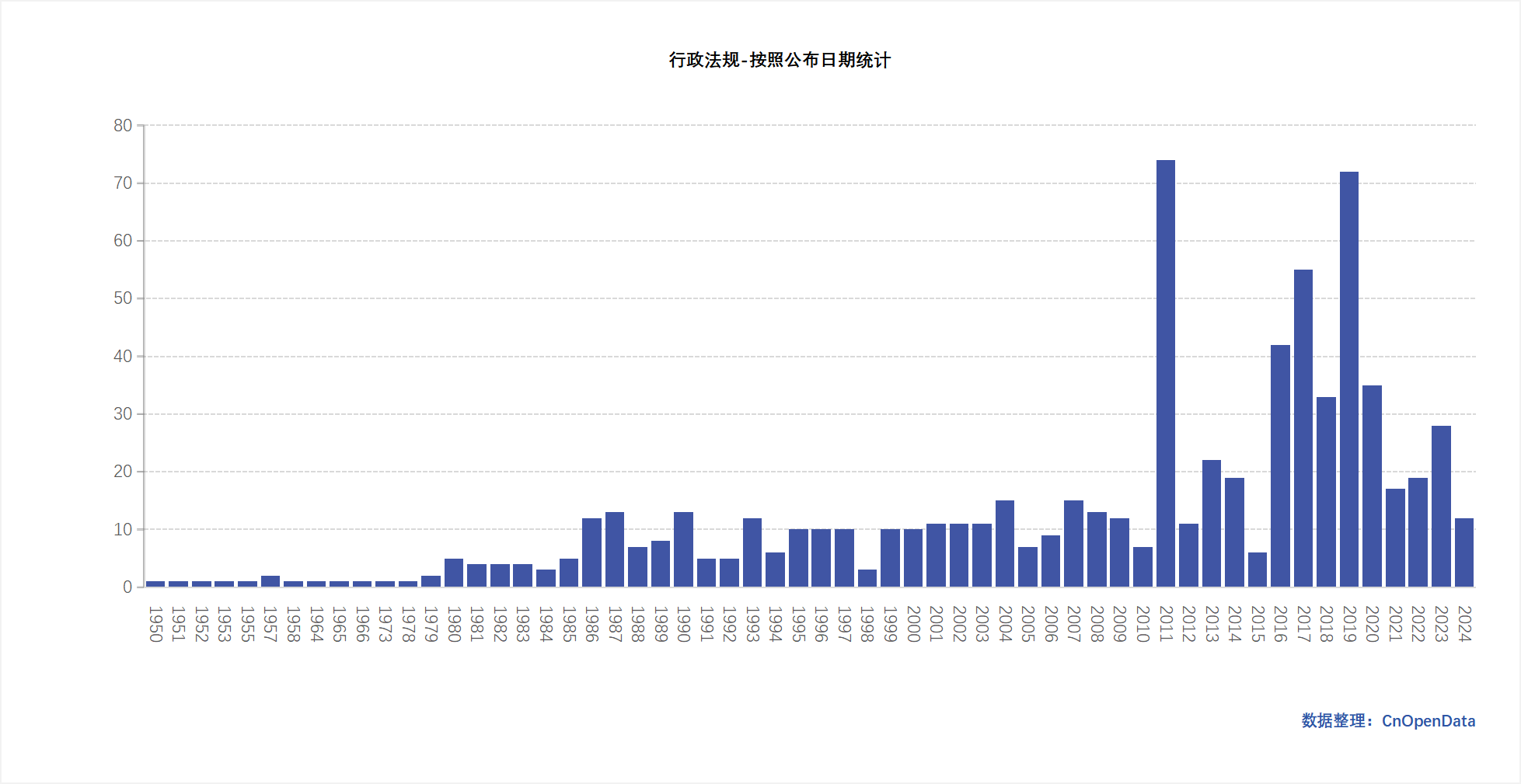
The National Laws and Regulations Database launched by CnOpenData covers four modules: national laws, administrative regulations, local regulations, and judicial interpretations. It includes fields such as title, enacting authority, legal nature, effective date, and full text content. The data covers three legal statuses: valid, amended, and repealed.
Time Period
1950 - June 2024. (Specific time ranges for different laws and regulations are detailed in sub-tables. Updates available upon request.)
Data Scale
Field Display
Sample Data
Laws
Administrative Regulations
Local Regulations
Judicial Interpretations
Relevant Literature
- Liu Yida, 2023: "The Position of Supervision Regulations in China's Legal System," Xingzheng Faxue Yanjiu (Administrative Law Review), No. 2.
- Zhao Jianwen, 2010: "The Status of International Treaties in China's Legal System," Faxue Yanjiu (Chinese Journal of Law), No. 6.
Data Update Frequency
Annual updates